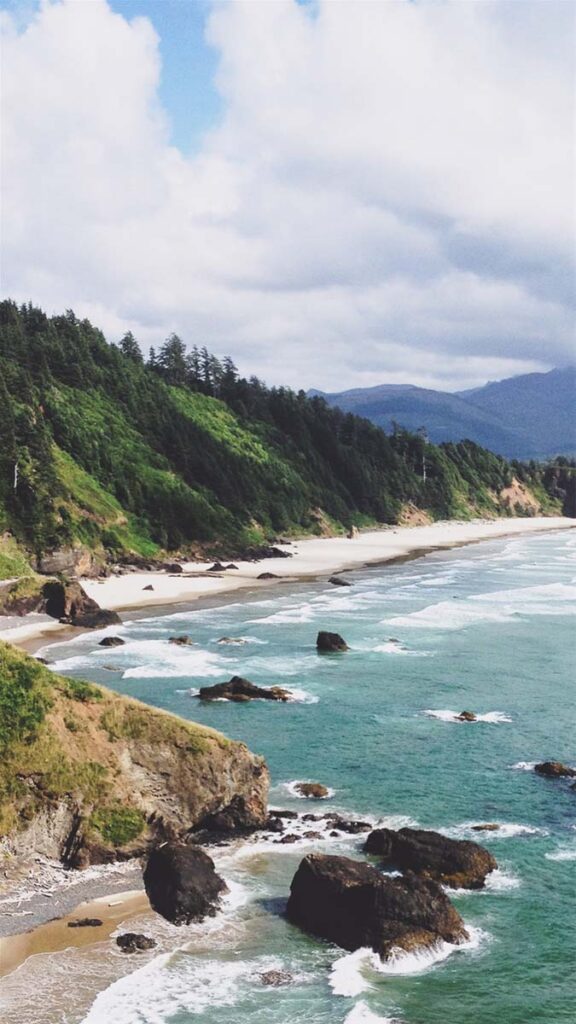


No matter what time of year you visit Cannon Beach, you’re guaranteed to see some incredible wildlife. Whether it’s the local Roosevelt Elk herds, the vibrant marine life in the Haystack Rock tidepools, distant breaching whales, or springtime’s tufted puffins, everywhere you turn, Mother Nature is at work through the many varied creatures of Oregon’s coast.
As you plan your upcoming visit, get the camera ready. We’re going to tell you all about the animals you’ll see, where to find them, and how to ensure everyone (including the wildlife) stays safe.
In This Article:
- What Animals Live in Cannon Beach, Oregon?
- Where to See Elk in Cannon Beach?
- Best Places to See Cannon Beach Wildlife
- Safety Rules for Wildlife Viewing in Cannon Beach
- Vacation Rentals with Wildlife Views
- FAQs
What Animals Live in Cannon Beach, Oregon?
Beyond the tiny creatures you’d expect to find just about anywhere in the U.S.—things like bunnies, sea gulls, and curious squirrels—Cannon Beach is home to a variety of coastal wildlife that make this stretch of shoreline truly unique. While some can be found year-round, others arrive annually for mating seasons or as part of larger migrations.
The most popular animals to watch for include:
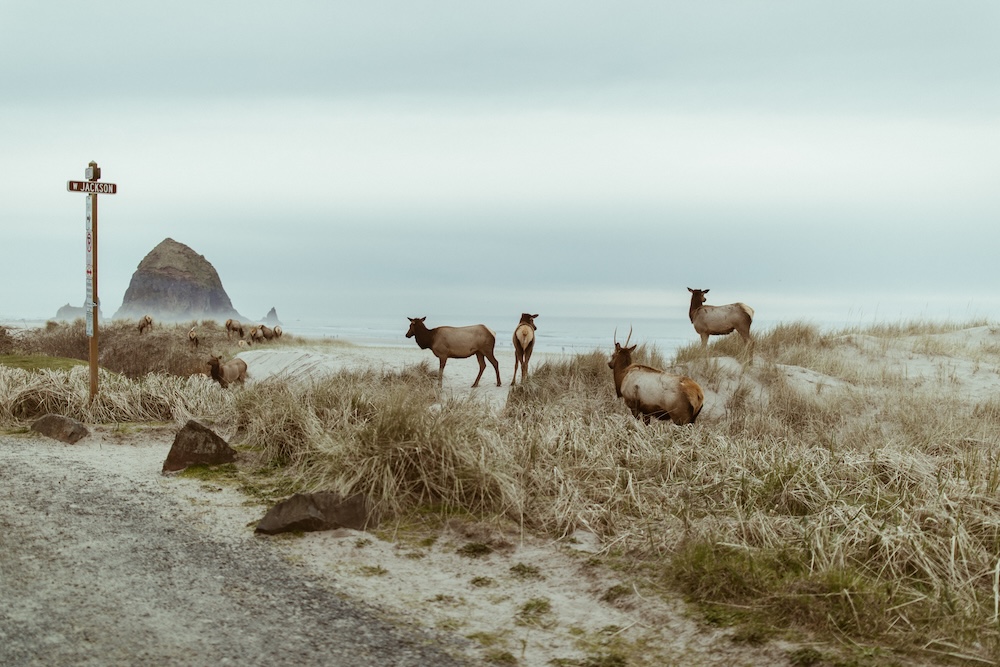
- Roosevelt Elk – local herds roam freely in Cannon Beach
- Tufted Puffins – Haystack Rock favorites that visit from April – August
- Bald Eagles – While common to the PNW, they’re always mesmerizing to see
- Sealions – Look for them resting on rocky shorelines mid-day
- Seals – Playful creatures often spotted floating just offshore
- Gray Whales – Scan the horizon for distant water spouts in spring and winter
- Sea Stars – Purple and bright orange varieties are visible at low tide every day
- Green Anemones – Just like sea stars, low tide near Haystack Rock or along any stretch of coastline in Cannon Beach reveals tons of anemones
- Common Murres – migratory shorebirds who visit Cannon Beach March – July
Where to See Elk in Cannon Beach?
Roughly 60 – 100 Roosevelt Elk live in and around Cannon Beach, and you can spot them just about everywhere, from your backyard to the beach and even downtown streets! As locals, we’ve grown accustomed to these towering visitors stopping by to munch on low-hanging branches and garden plants, and if you’re vacationing in the area, that’s a great place to start when it comes to spotting the elk.
Early morning, as you drink your coffee, or at dusk just before dinner, take a peek through your windows, you may very well see a few in your or your neighbor’s yard!
The herds don’t stay in one place all day, and seeing them in Cannon Beach, while common, isn’t always a guarantee. Their meandering spans a few miles, and they spend their time spread between the rainforests for protection and open valleys for grazing.
We’ve spotted some along Highway 101, grazing in the grassy median, south of town in Tolovana, and up into Ecola State Park.
Best Places to See Cannon Beach Wildlife
We’ve already covered where to see the Roosevelt elk of Cannon Beach – backyards, on the beach, and in nearby state parks or even downtown streets. For other wildlife, here are the most popular ways to see them.
Shorebirds
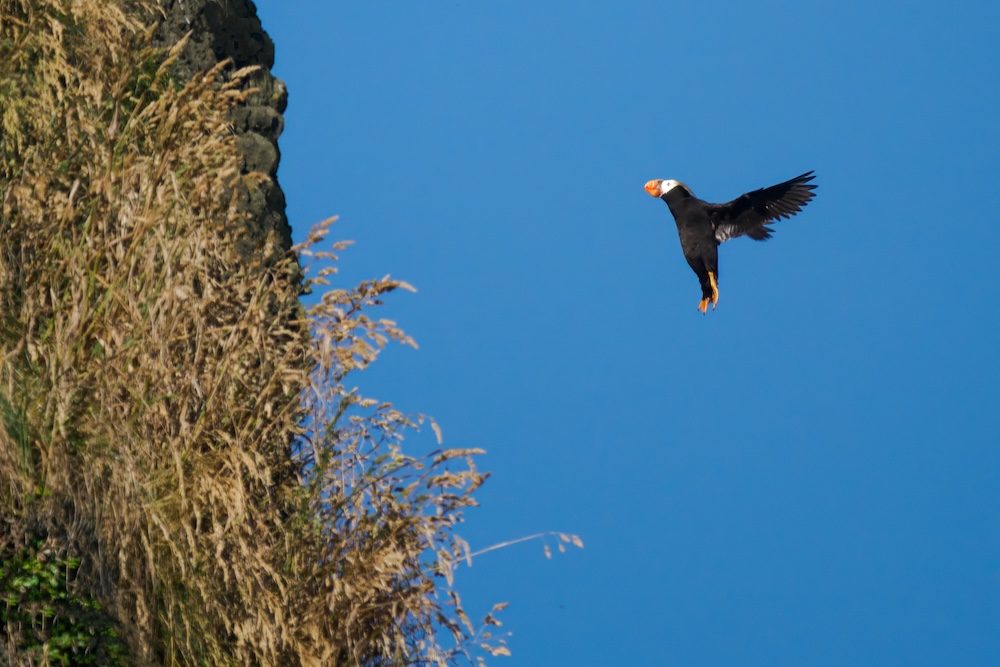
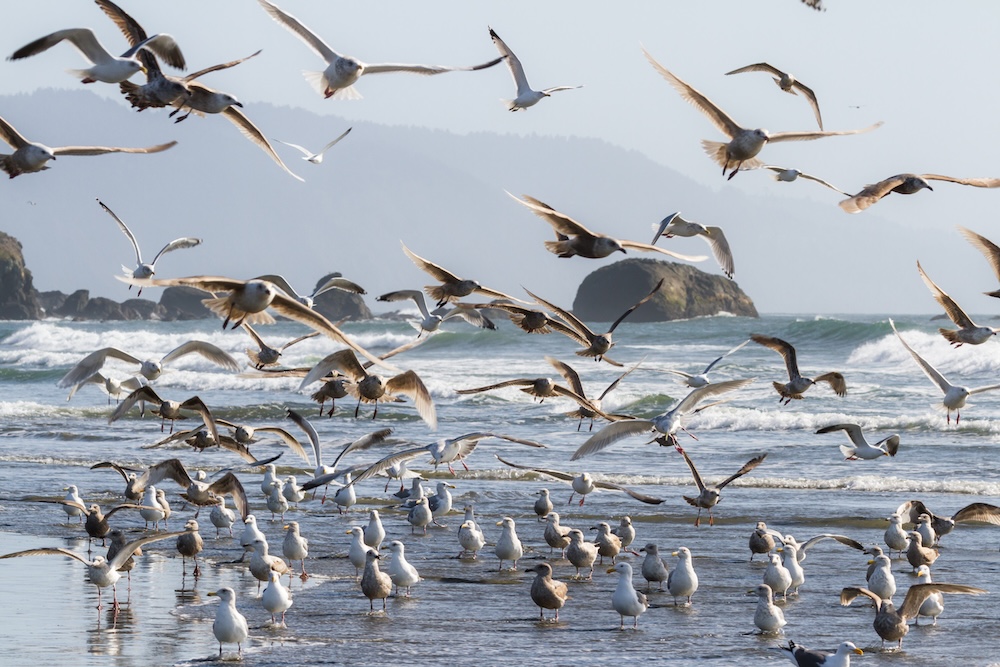
There are tons of varieties of shorebirds that call Cannon Beach home for at least a few months every year. Those include, as we mentioned earlier, the popular tufted puffins, bald eagles, and common murres, as well as pelagic cormorants, western gulls, and more.
One of the best places to spot many varieties is at Haystack Rock in the early morning. As you walk out on the shore, look toward the rock. When the birds go on the hunt for food, they’ll often fly together in a large circle around the top of the rock—thousands of wings beating together, creating a floating halo over the iconic landmark. Have the zoom lens prepped for this photo-worthy moment.
Whales, Seals, and Sealions
There are about 18,000 gray whales that migrate through the open ocean off Cannon Beach’s coast every year. If you’re visiting from mid-December through mid-January or in spring during March and April, there’s a good chance you may see some! There are no official whale watching boat tours in Cannon Beach; you have to go to Depoe Bay for that, but you don’t really need them. Head to Ecola State Park and hike the Clatsop Loop Trail. At the top, you’ll have an incredible view of the water and giant sea rocks. Bring binoculars and search the water for spouts of water, breaches, and tail flaps.
Seals and Sealions are commonly spotted from Washington to California. In Cannon Beach, you can sometimes see them bobbing in the water as they float along on their backs. Occasionally, they’ll be on the beach with their young.
For sealions, look for rocky areas right by the water, that’s where they’ll tend to rest during the day – sunning themselves during a mid-day nap. If you venture to Astoria from Cannon Beach during your stay, head to the Bowline Hotel for an up-close viewing opportunity!
Marine Life
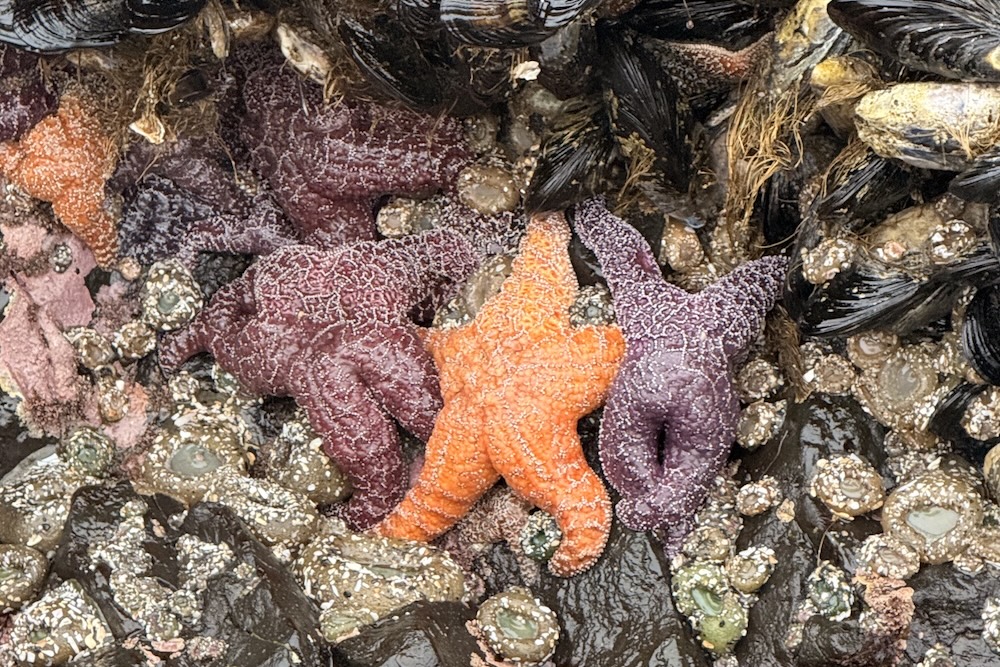
The tidepools around Haystack Rock and other shoreline areas in Cannon Beach are teeming with life. At low tide, you’ll find rocks covered in oysters, barnacles, and limpets. Starfish and anemones hang from the underbelly of stony surfaces. In the shallow water, crabs, tiny fish, sand dollars, nudibranchs, and sponges are all on display. You can go on a personal scavenger hunt to see how many different types of marine life you see. This popular activity brings out everyone, including locals, on their daily walks.
When you visit Haystack Rock at low tide, look for the Haystack Rock Awareness Program volunteers; they’ll be in red vests or jackets. These locals are full of knowledge and will happily tell you all about the different species you’re seeing.
Safety Rules for Wildlife Viewing in Cannon Beach
It’s important to respect the wildlife you see in Cannon Beach, not only to ensure the animal’s safety, but yours as well.
Did you know an elk stands roughly 5 feet tall at their shoulder and can be almost 8 feet long? They also weigh almost a ton. These aren’t small creatures, and while they may seem like peaceful deer, they are wild animals. A mother with a young calf or a male in rut can create very dangerous situations for people who get too close.
As a rule of thumb—literally—to see if you’re far enough away from an elk, hold out your arm and stick up your thumb. Line your thumb up with the animal. If, when you close one eye, you can see any part of the elk sticking out, you’re too close.
Keeping about 100 feet between you and them is best. That’s about the equivalent of three school buses.
Other safety tips for elk include:
- Zoom in on your camera instead of getting closer for pictures
- Never approach or feed the elk
- Keep your dogs leashed at all times
- Pay attention to your surroundings, especially at dawn and dusk
Remember, too close is too late. Locals encourage visitors to stay back and stay safe.
Video: Hear from Locals about Living Alongside the Elk
For marine life, do not touch. Though it may be tempting to feel a starfish or an anemone when you’re tidepooling, you can actually injure them. When starfish are out of the water, they’re essentially paralyzed. They use water to control their limbs, and without it, they’re stuck. From the moment the tide goes out until they’re safely submerged again, these animals are at their most vulnerable. Abide by the posted signs around Haystack Rock, and don’t go inside roped-off areas.
If you see injured wildlife during your visit to Cannon Beach, call the Wildlife Center of the North Coast at (503) 338-0331.
Vacation Rentals with Wildlife Views

Featured Property: Gull’s Nest
For incredible wildlife viewing opportunities, an oceanfront vacation rental from Beachcomber Vacation Rentals is just the thing. At these properties, you can glimpse distant whales and shorebirds. You may even spy some elk in your backyard or see them roaming the beach or dunes outside your home.
Our properties are equipped with everything you need for an unforgettable trip, from free activity tickets every day of your stay to welcome treats for your four-legged family members. Plus, when you book directly with our team, you’ll save on your stay by skipping the third-party fees of places like Airbnb or Vrbo.
Check out our full inventory and find your Cannon Beach home away from home today.
Frequently Asked Questions
When are the puffins at Cannon Beach?
Tufted puffins return to Cannon Beach, Oregon, each year around mid-April. They stick around through August. Head to Haystack Rock for the best chances to see them during your visit.
Can I see whales from the shore in Cannon Beach?
Yes! No need to drive two hours to Depoe Bay for a whale watching tour. Just bring some binoculars and scan the water. You can see breaches, spouts, and tail splashes all from the shore.
How far back do I need to be from a wild elk?
Stay at least 100 feet away from elk in Cannon Beach. That’s the equivalent of about three school buses. This not only protects you, but it helps distance the animals from human interaction. Too much of which can lead to dangerous situations for them, and for you.
By Jennifer Jeffcoat
Jennifer writes for Beachcomber, sharing her favorite things about Cannon Beach and the surrounding areas so travelers can plan trips they’ll remember for a lifetime.